Low wheel–rail adhesion is not a seasonal nuisance. It is a permanent operational challenge, present on every railway network in the world, all year round.
Leaf film — crushed organic matter that bonds to the rail like black ice, virtually invisible and extremely slippery.
Moisture & rain — activates dormant deposits and reduces surface friction instantly.
Sand & dust — fine particles from desert zones, industrial areas and dry trackbeds.
Ice & frost — a physical film between wheel and rail with near-zero friction.
Grease & industrial contaminants — lubricant overflow, metallic dust, oil residue — persistent worldwide.
The UK figures above represent a single network. Multiply them across Europe, Asia, North America and the Middle East — and the true scale becomes clear. Every existing solution acts after the contamination reaches the rail. There is no preventive answer on the market today.
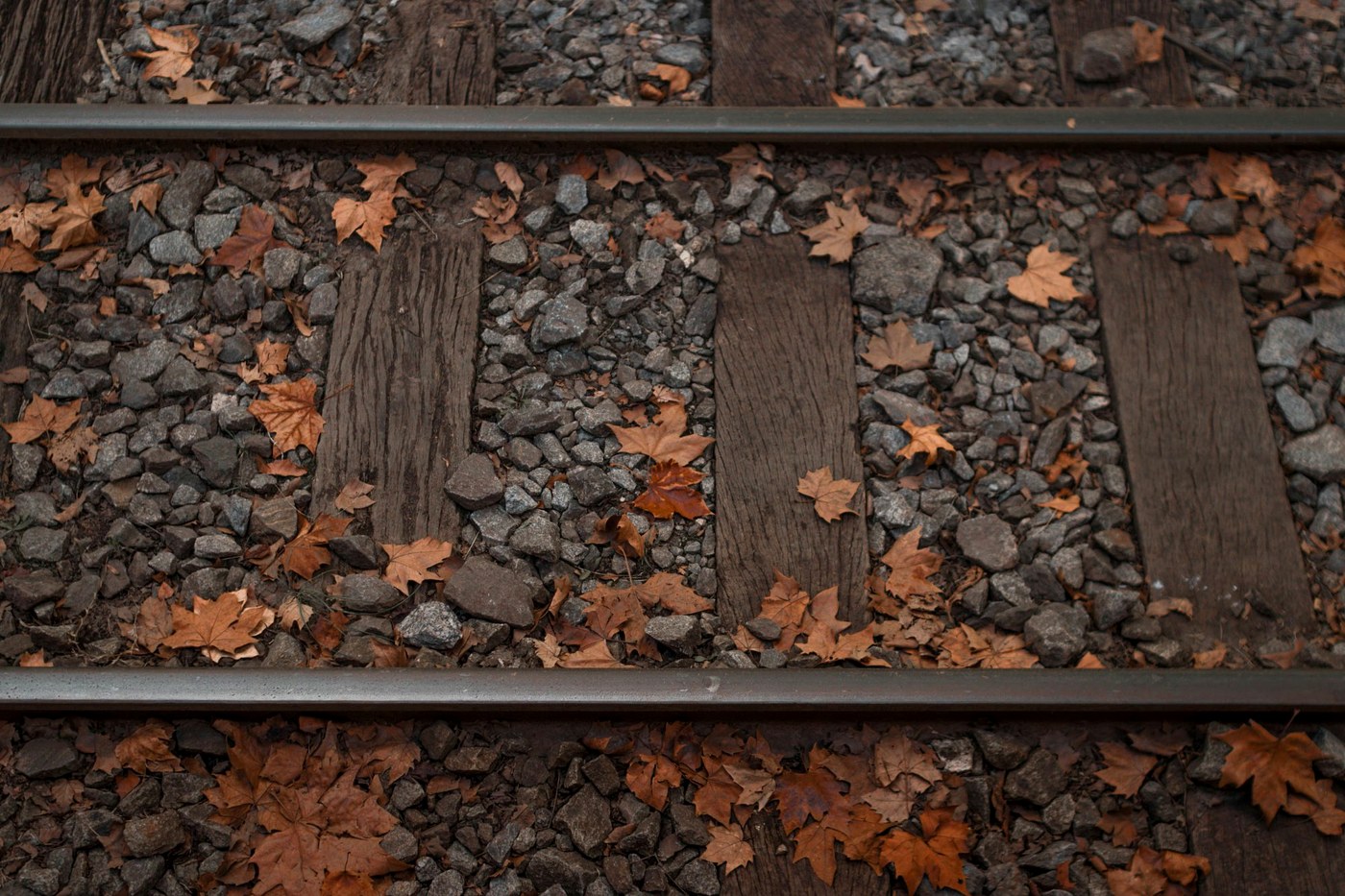

Rail vehicles operate most of the time between 100 and 160 km/h — sometimes faster. At these speeds, the train generates a continuous flow of high-energy air that today passes completely unused, while contaminants accumulate beneath the train, coating the rail surface before the wheel arrives.
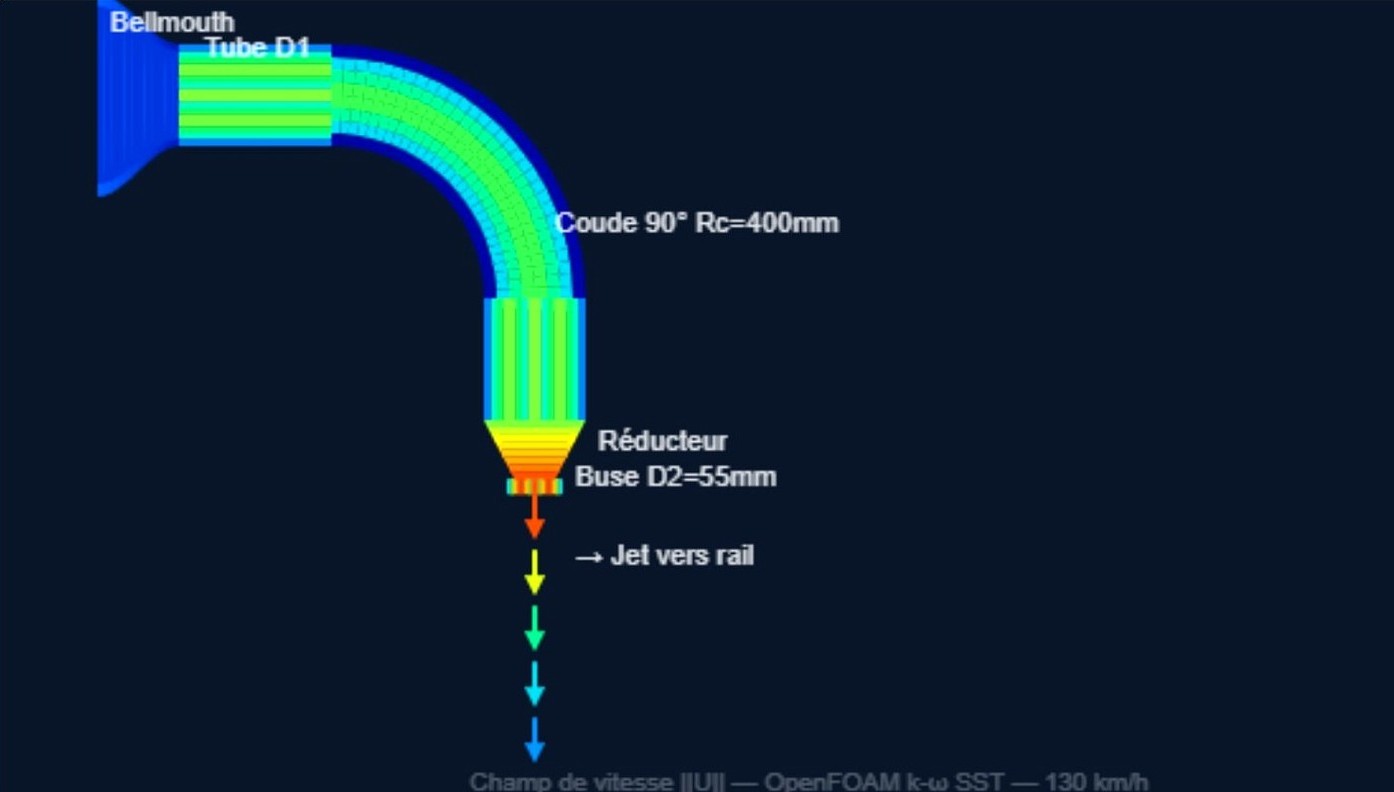
AirflowRail captures that airflow, amplifies it ×11 through a converging nozzle, and redirects a high-velocity jet directly onto the rail — before the wheel–rail contact occurs.
No power supply. No moving parts. No maintenance schedule. The faster the train, the more effective the device.
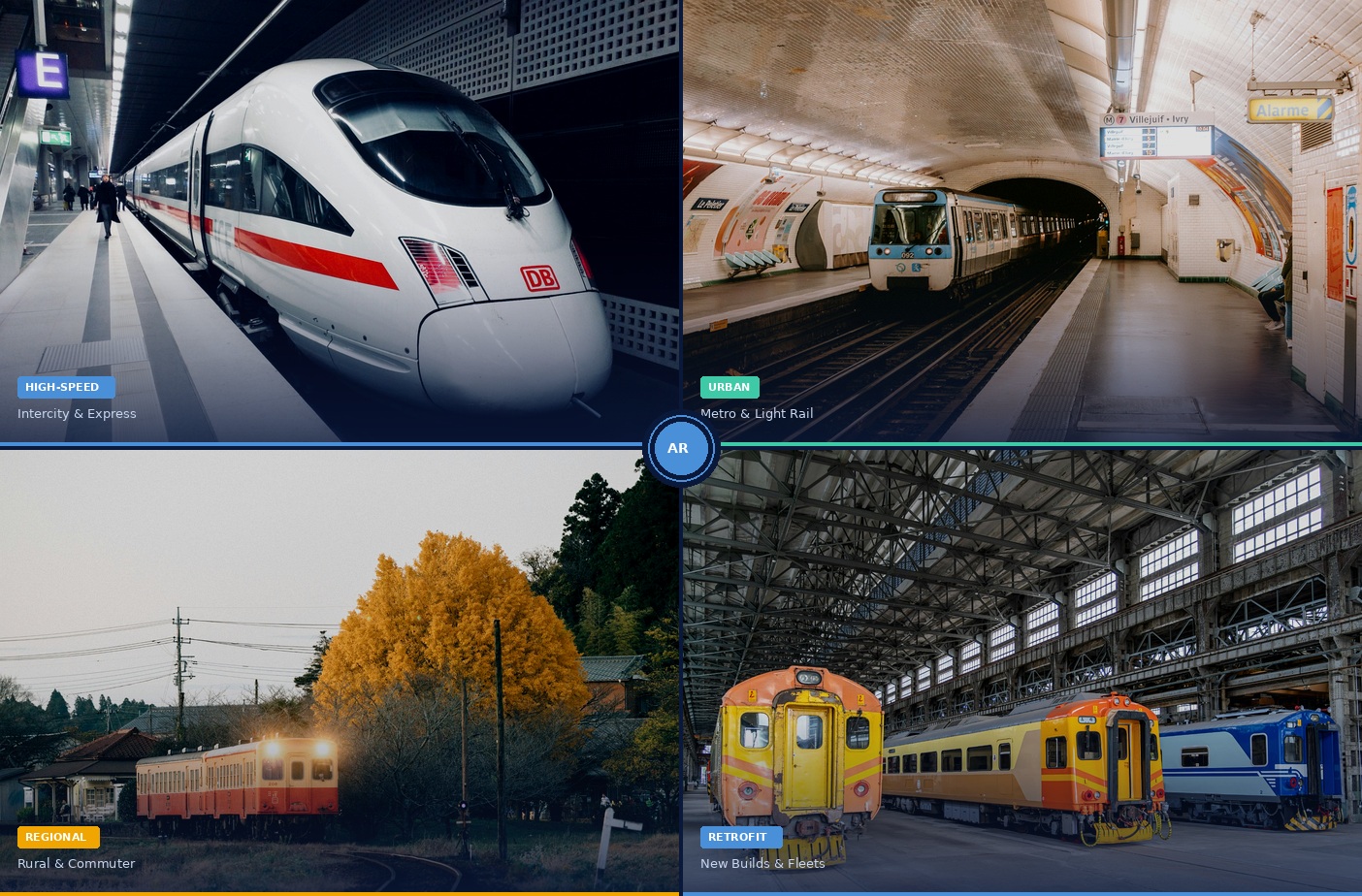
From high-speed lines to urban metros, from humid European autumns to Middle Eastern sandstorms — AirflowRail installs on any bogie, on any fleet, new-build or retrofit.
One device. One standard. Every network.
Every claim on this site is backed by analytical calculation and independent CFD simulation. This section brings together our technical documents alongside published studies and industry research on rail adhesion — so you can verify the problem, understand the physics, and evaluate the solution yourself.
Making rail transport more reliable, efficient and universal through simple, robust passive solutions designed for all environments.
We focus on a simple idea: using ingenuity and passive technology to tackle a global adhesion challenge. A universal, instantly effective solution that improves braking consistency and operational safety — without electronics, maintenance or added complexity.
Across the world, railway networks face adhesion losses caused by environmental deposits such as leaf residue, sand, dust and moisture. These conditions lead to wheel slip, delays, incidents, increased energy consumption and high maintenance costs. Existing solutions are often reactive, expensive, complex or limited to specific climates.
AirflowRail Innovation develops passive devices capable of improving adhesion before the wheel–rail contact, without energy, electronics or maintenance. Our ambition is to provide a simple, universal and durable answer to a global challenge.

AirflowRail Innovation was born from a direct observation of a recurring problem in railway operations — and the conviction that a simpler, more effective answer existed.
Drawing on field experience and the study of existing solutions' limitations, the device was designed from first principles: use only the physics already present in a moving train to solve an adhesion challenge that costs the industry hundreds of millions every year.
The result is AirflowRail — a fully passive, universal device that requires no energy, no electronics, and no maintenance.
Connect on LinkedIn →
AirflowRail Innovation
Passive solutions for reliable rail adhesion
